Ask an engineer – exclusive advice from the brains behind Raspberry Pi
A brand-new issue of Raspberry Pi Official Magazine is out now! To celebrate, they’ve let me share this sneaky snippet from the cover feature, ‘Ask an engineer’, featuring the seven Raspberry Pi Towers stalwarts who didn’t run fast enough when approached by writer Andrew Gregory.
The engineers are the people who make it happen. If you’ve ever had something work seamlessly, without you ever really thinking about it, it’s because somewhere, someone else has put a lot of thought into making it work. They’re obsessive about making things easier, more efficient, smaller, stronger… whatever the mission requires, they’ll do it.
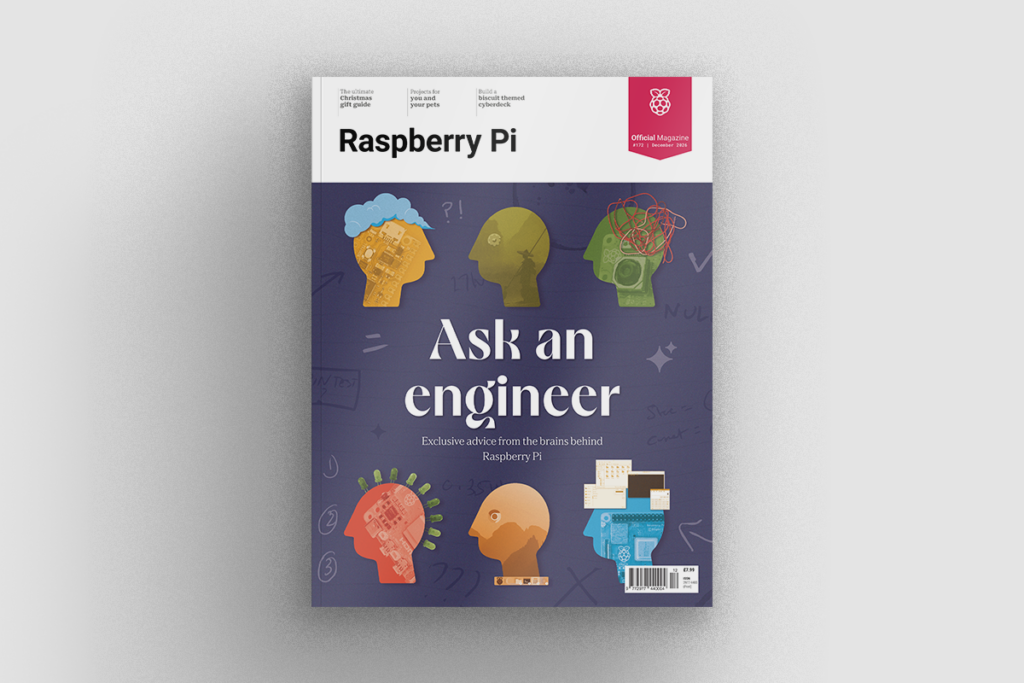
Unlike Apple, Intel, and Nvidia, whose devices are designed by faceless machines, ours are made by people. In many respects, these people are ordinary; they enjoy things like beer festivals, and going for nice walks, and cooking meat over an open fire on a sunny day. But in one crucial respect they’re different: they’re absolutely obsessive about understanding how things work. Let’s meet some of them:
Where do you start when you’re designing a piece of hardware?
After testing the prototype, you find out what refinements need to be made; typically these come in three areas: component selection, electronic schematic design, and PCB layout, depending on the change needed after testing. It’s really bad if the loop goes back to detailed specs, but it can happen! Typically it loops back twice. We call these R1, R2, and R3.
- R1 is the first prototype.
- R2 is the feature-complete version with all issues fixed following testing.
- R3 is the pre-production version. R3 is usually very similar to R2 because it exists only to fix any minor production issues. This is if everything goes to plan, e.g. the first loop back goes to schematic design. The second loop is hopefully just a tweak of the PCB layout. Sometimes the R2 needs a major change. This could happen if it fails compliance testing or a critical component becomes unavailable. This is why some boards reach R4 or R5 before reaching mass production.
Simon Martin
What advice would you give to anyone starting out in hardware engineering?
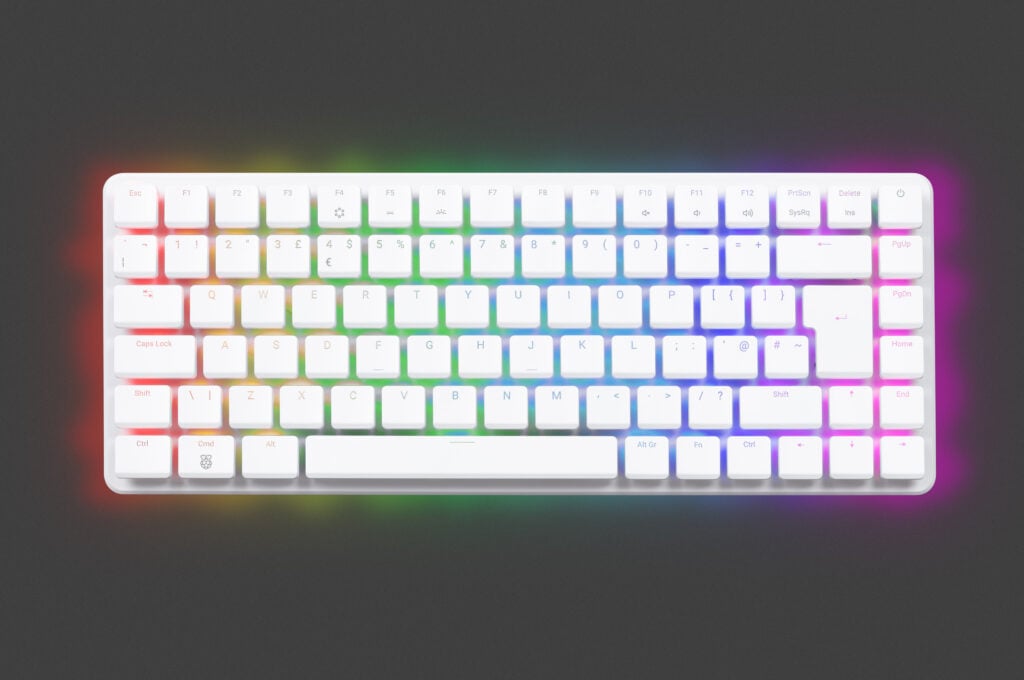
Play with electronics as much as possible. Try making things for yourself and others; you will learn so much just by doing projects yourself. Having a wide range of electronics knowledge is important. You don’t need to know all the detailed maths behind a design, but knowing the maths exists and that you can look it up and understand it helps. Look at other people’s designs and try to understand them. A wide range of equipment service manuals can be found online, so you can see how some professional equipment has been designed. Don’t just limit yourself to digital electronics. All digital signals are analogue at heart!
Dominic Plunkett
What do you love about your job?
Switching on the first prototype and seeing it spring to life! We bring the board into the lab and hook it up to bench power supplies that limit the current in case the board has a short circuit — it’s always a relief when the current measurement shows what we expect.
We start probing with meters and oscilloscopes to ensure individual circuits are working. The on-board regulators, which generate voltages like 3.3V and 1.8V from the USB power input, should switch on. We check that they have the correct voltage and use an oscilloscope to ensure there is no ripple or other noise, i.e. we have a clean power supply. Perhaps an internal clock will start up, and this can also be checked on the oscilloscope. Perhaps a power LED lights up and the system tries to boot. It’s a joy that all the design and planning has culminated in this one board, sitting in the lab waiting to be programmed.
By this point, a software engineer is working with me. Perhaps after a day or two of adjusting software settings and device drivers, it wakes up and starts its program. This could be a camera or a small computer board. I receive feedback about how to make things better and am often already thinking about a production revision with all the fixes in place.
Simon Martin
I often hear “Oh, the computer is playing up” or “That’s too complicated” from non-technical computer users, and it’s immensely satisfying to see those same users get joy out of our hardware and software.
Tom Dewey
I love seeing the novel ways the community uses the technology I worked on. For example, WWF using Raspberry Pi devices to monitor snow leopards.
Naush Patuck
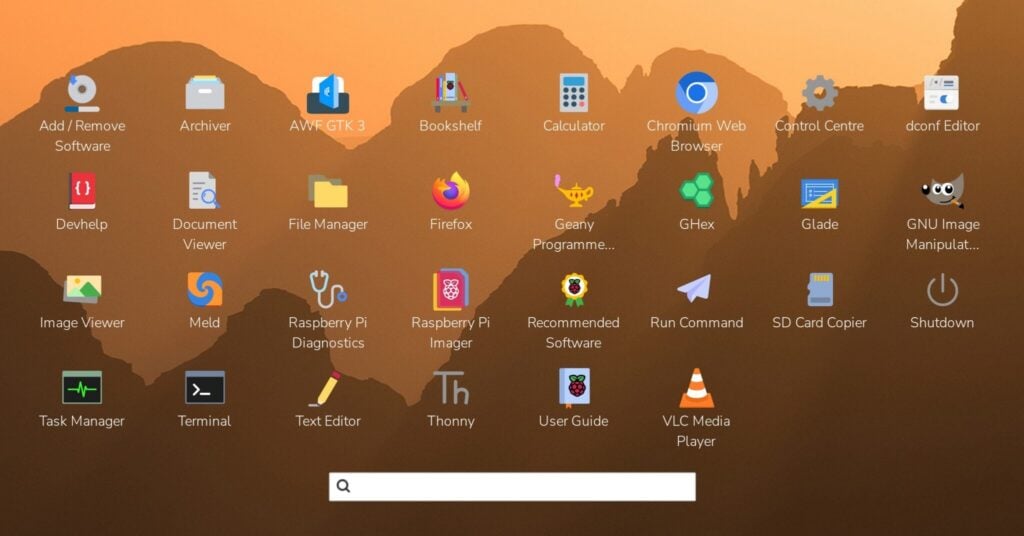
That I create something that wouldn’t otherwise exist. I can point at the Raspberry Pi Desktop, for which I have now been solely responsible for over a decade, and track every little improvement, and know it came from an initial idea I had of “how can I make this particular thing a bit better?”, which I then implemented and made real. I love that I see the Desktop all over the place — on TV programmes, in shops and schools — and it’s now not even a surprise; that my work has become almost ubiquitous. I still find it slightly odd to sit down and watch YouTube videos made about the Desktop, and to think these people are devoting hours of their time to talking about my work — it’s quite humbling in a way.
Simon Long

What tips do you have for writing better software?
- Keep it simple. Code should be concise, tidy, and with as few moving parts as practicable. Avoid overly large functions!
- Good nomenclature (i.e. function and variable names) is vital and often overlooked. If a function really does what its name suggests, someone who comes along afterwards is halfway there on first reading.
- Structure carefully, e.g. define APIs, layer code behind those APIs, limit the scope of data and functions. It doesn’t have to be an object-oriented (OO) language (that just helps enforce it if correctly applied).
Andrew Burge
How do you get the most out of your Raspberry Pi?
Choose a project and just jump in! The best way to learn about technologies or to get the most use out of our products is to use them in a practical situation. For example, make a bird monitor using a camera and AI to identify the bird, or make a security camera for your home. Or add some smart home features using Home Assistant, with AI-enabled smart device control.
Naush Patuck
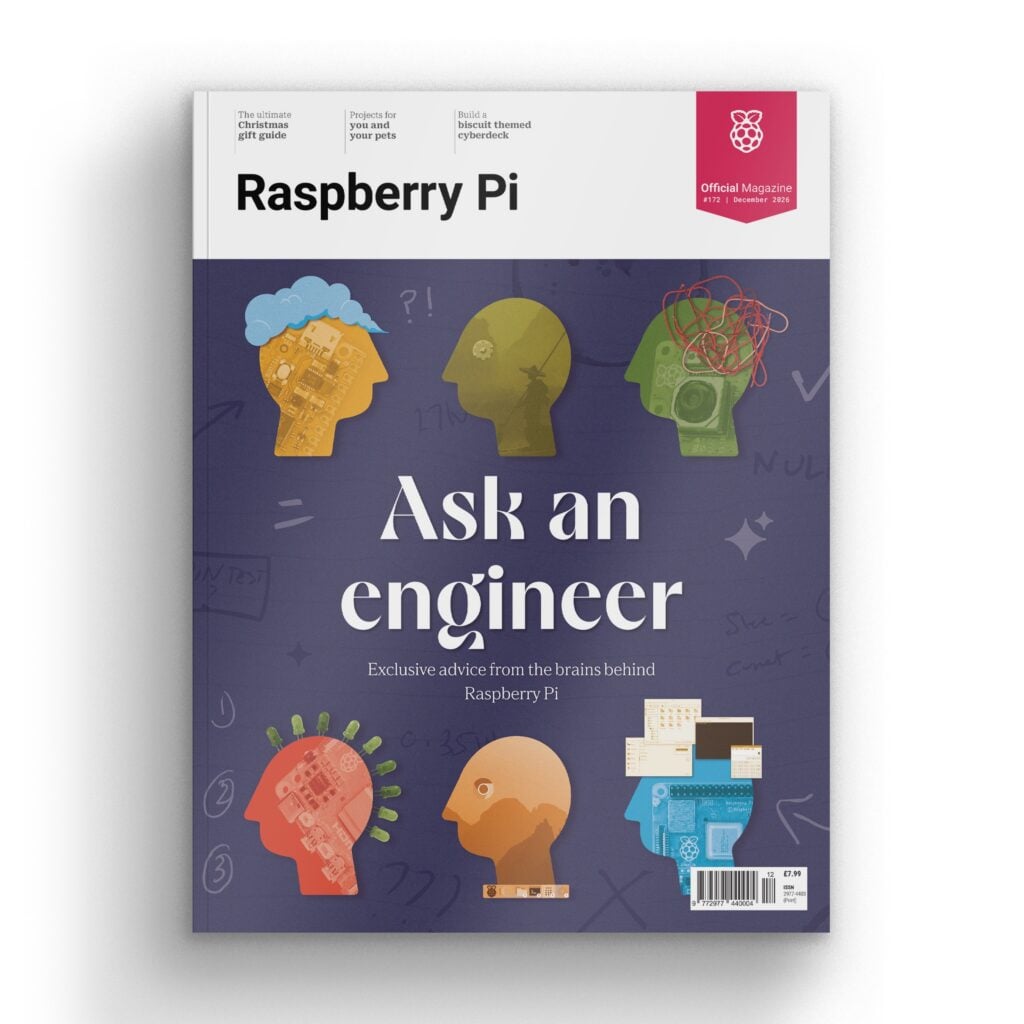
Issue 172 of Raspberry Pi Official Magazine is out NOW!
This article appeared in issue 172 of Raspberry Pi Official Magazine, which you can access online. You can also subscribe to the print version of our magazine. Not only do we deliver worldwide, but those who sign up to the six- or twelve-month print subscription will receive a FREE Raspberry Pi Pico 2 W!
You can find Raspberry Pi Official Magazine on Facebook, X, Threads, LinkedIn, and Mastodon. You can also contact the team via email: [email protected]



1 comment
Jump to the comment form
Mr U.S.A
Ask an engineer?
If Eben or Raspberry Pi LTD desire an increased profit margin it must consider a digital store like Steam but allow free game download with “no registration”. Work with game developers to port and develop original games to the ARM Raspberry Pi hardware. Engineers must design external GPU solutions. I have several Pi’s but Raspberry Pi LTD must expand it’s “consumer” use case.